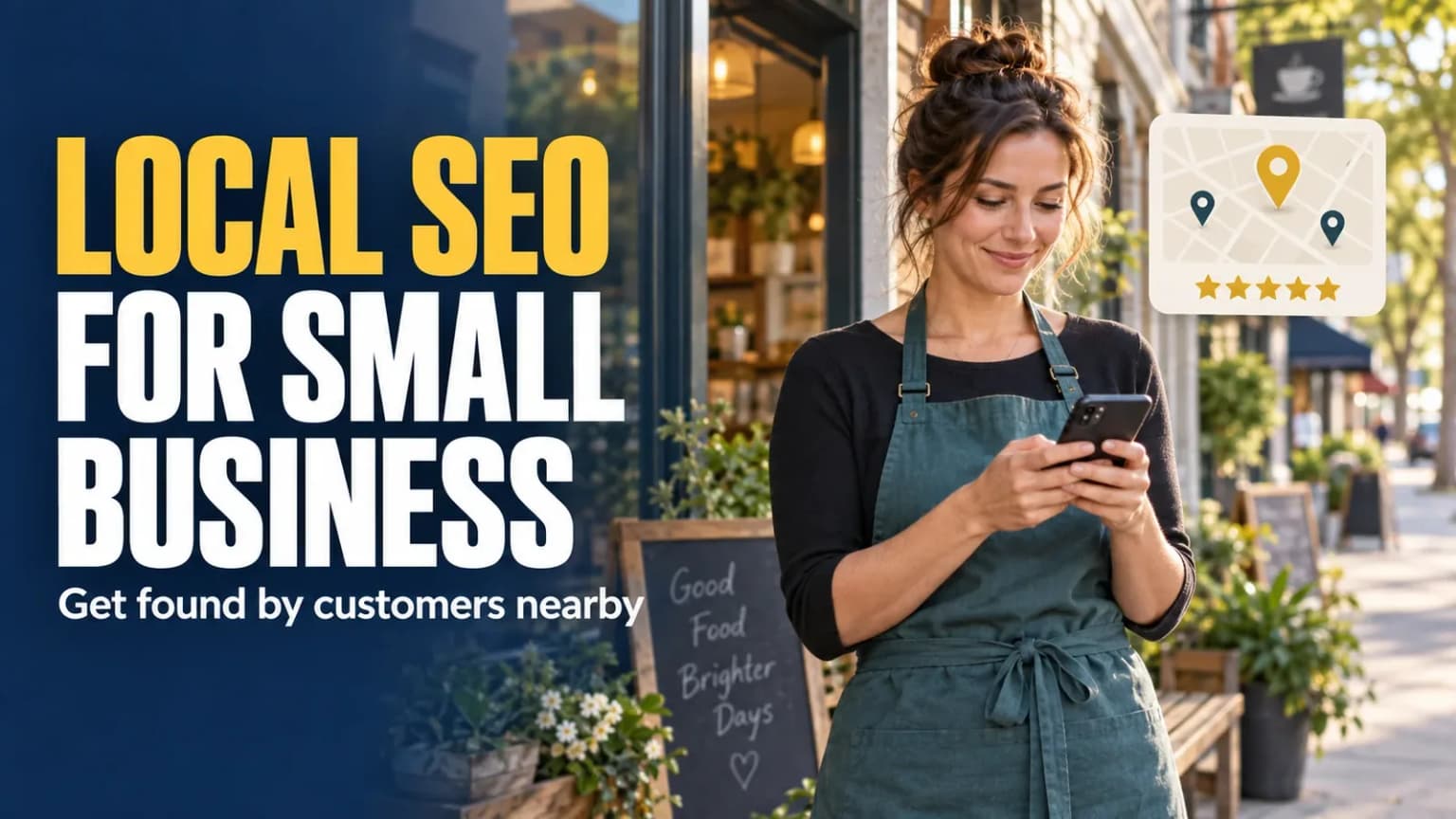
When someone searches "Local SEO for small business" or "best tacos in Austin," Google shows a map with three businesses above almost everything else. Those three get most of the calls. For a company that serves a specific area, earning one of those spots is worth more than almost any other marketing effort. That is the goal of local SEO for small business. This guide covers what drives local rankings, the steps that matter most, and the mistakes we see US business owners make again and again.
What Is Local SEO and Why Does It Matter?
Local SEO is the practice of improving your visibility in location-based searches on Google Search and Google Maps. It matters because people searching locally are usually ready to act. Someone looking for an emergency dentist or a nearby tire shop typically calls or visits a business within hours, not weeks.
It also levels the field. A family-owned HVAC company cannot outspend a national brand on advertising, but it can outrank that brand in its own zip codes.
Google states that local results are based mainly on three factors:
• Relevance: how well your profile matches what the person searched for
• Distance: how close you are to the searcher or the location named
• Prominence: how well known and trusted your business appears, based on reviews, links, and mentions
You cannot change your distance. The rest of this guide focuses on the two factors you can control.
How Do You Optimize a Google Business Profile?
Claim and verify your free Google Business Profile, then complete every field. Choose the most specific primary category, write an accurate description, list your services, set correct hours, and upload real photos. Complete, active profiles earn more visibility and more calls than sparse ones.
Priorities, in order of impact:
1. Primary category. This is the strongest relevance signal you control. "Personal injury attorney" will outperform "law firm" for injury searches.
2. Accurate hours, including holidays. Customers who arrive to a locked door often leave a one-star review.
3. Real photos. Show your storefront, team, vehicles, and finished work. Avoid stock images.
4. Services and products. List each one with a short description.
5. Regular updates. Post offers or news occasionally to show the business is active.
A typical scenario: a roofing contractor in Florida had its profile set to the broad category "Contractor." After switching to "Roofing contractor," adding service listings, and uploading project photos, the company began appearing for roof repair searches where it had been invisible.
How Important Are Online Reviews for Local Ranking?
Reviews are among the strongest prominence signals and the biggest influence on whether a searcher chooses you. Quantity, star rating, recency, and your responses all matter. A steady flow of genuine reviews outperforms a large batch collected once, because fresh reviews signal an active, trusted business.
Build a simple, repeatable system:
• Ask every satisfied customer, ideally right after the job is done.
• Send a direct review link by text or email to remove friction.
• Reply to every review, positive or negative, politely and specifically.
• Never buy reviews or offer discounts in exchange. It violates Google's policies, and FTC rules on fake reviews carry real penalties.
A calm, helpful reply to a negative review often wins more customers than the review loses. Future customers are reading how you handle problems.
What Are Citations and NAP Consistency?
Citations are online listings of your business name, address, and phone number, known as NAP, on sites such as Yelp, Apple Maps, Bing Places, and industry directories. Consistency matters because conflicting details make your business look less trustworthy to both search engines and customers.
Common problems to fix:
• An old address still listed after a move
• A tracking phone number on some sites and the main line on others
• Name variations, such as "Smith Dental" in one place and "Smith Family Dentistry LLC" in another
Start with the listings that matter most: Google, Apple Maps, Bing, Yelp, Facebook, and the leading directory in your industry. Use exactly the same format everywhere, and review it once a year.
Does Your Website Still Matter for Local SEO?
Yes. Your website supports your profile's relevance and prominence. Create a dedicated page for each core service and each major area you serve, show your NAP in the footer, make the site fast on mobile, and add local business schema markup so search engines can read your details.
Content quality counts here too. Thin, near-identical "city pages" that only swap the location name rarely perform. Pages with real project photos, local details, and specific answers do. We explore that standard in what Google's helpful content signals mean for publishers in practice.
Local links also build prominence. Sponsor a youth team, join the chamber of commerce, or contribute a quote to a local news story. A handful of genuine local links beats dozens of irrelevant ones.
Finally, measure results. Track calls, direction requests, and website clicks in your profile's performance report each month. Marketing should be judged like any other investment, especially when financing is expensive, a topic covered in our Business section.
3. Frequently Asked Questions
1. How long does local SEO take to work?
Profile improvements can show results within a few weeks. Competitive markets usually take three to six months of steady work on reviews, content, and links.
2. Is local SEO free?
The core tools are. A Google Business Profile costs nothing, as do most major directory listings. The investment is mainly your time, or an agency's fee if you outsource.
3. Can I rank in a city where I have no physical address?
It is difficult in the map results, since distance is a core factor. Service-area businesses can set service areas and build strong location pages to compete in regular search results.
4. How many reviews do I need?
There is no fixed number. Aim to match or exceed the competitors currently in the top three for your main search terms, then keep new reviews arriving every month.
5. Should I use a PO box or virtual office for my listing?
No. Google's guidelines require a real, staffed location or a genuine service area. Listings using virtual offices are frequently suspended.
6. Do social media profiles help local SEO?
Indirectly. They are not a major ranking factor, but they create consistent citations, drive branded searches, and give customers more ways to find and trust you.
Conclusion
Local SEO for small business is not complicated, but it rewards consistency. Complete your Google Business Profile, choose the right category, earn reviews every week, keep your details identical everywhere, and build a website that genuinely helps local customers. Businesses that follow these basics for six months usually outrank competitors that spend far more on advertising. For more practical guides, visit our Marketing section and our SEO coverage.