The Nobel Peace Prize 2026 went to Navanethem "Navi" Pillay, a South African jurist, and not to President Donald Trump, who had said publicly that he deserved it. The Norwegian Nobel Committee announced the award in Oslo on October 9, honoring Pillay "for her efforts to promote peace and international law" (Norwegian Nobel Committee).
Trump reacted sharply, and his administration sanctioned the International Criminal Court within hours. Below is a plain explanation of who Pillay is, what the committee said it was rewarding, how Trump responded, and why the gap between his case and the committee's choice was wider than it might look.
Who is Navi Pillay, the Nobel Peace Prize 2026 laureate?
Pillay, born in 1941, has spent decades in courtrooms. According to ABC News, her career includes:
- Judge on South Africa's High Court
- Judge on the International Criminal Tribunal for Rwanda
- Judge on the International Criminal Court (ICC)
- UN High Commissioner for Human Rights
- Chair of the UN commission of inquiry on the Occupied Palestinian Territory
- Currently a judge at the International Court of Justice in the case accusing Myanmar of genocide
Her most widely cited legacy comes from the Rwanda tribunal. The committee credits her with helping establish that rape and sexual violence can count as crimes against humanity and acts of genocide.
Her most controversial recent work is the Gaza inquiry. The three-member UN panel she led concluded last year that Israel committed genocide in Gaza (AP via La Nación). Israel rejects that finding, refused to cooperate with the inquiry, and says Hamas is responsible for civilian deaths.
What the committee said it was rewarding
The committee's announcement was less about one person than about an idea: that law, not force, keeps the peace. Its central message was that "peace requires justice."
It also warned that the international legal system is under strong pressure, that judges are being sanctioned, and that courts are under attack. In the committee's words, when might overtakes right, stability and trust suffer.
That framing matters for understanding the Nobel Peace Prize 2026. The committee chose to reward legal institutions at a moment when those institutions were in open conflict with the US government.
How Trump reacted to the Nobel Peace Prize 2026 decision
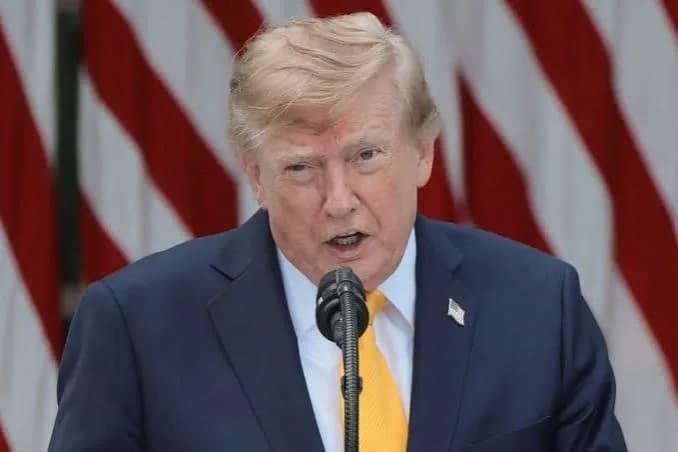
Trump had lowered expectations before the announcement. In the Oval Office two days earlier, he said he deserved the prize but doubted the committee would give it to "people like me" (South China Morning Post).
After the decision, his response was blunt:
- On Truth Social (October 10): He listed achievements he says he deserved credit for, including settling eight wars, bringing home Israeli hostages, capturing Venezuela's leader, and preventing Iran from getting a nuclear weapon (Fox News).
- At a rally in Syracuse, New York: He called the decision "disgraceful and embarrassing," said he had never heard of Pillay, and warned, "we will not forget, Norway" (AAP via Newcastle Herald).
Some of Trump's claims, such as his statement that he prevented wars between the Koreas and between China and Taiwan, came without supporting evidence, according to that same report.
The ICC sanctions the same day
Hours after the announcement, Secretary of State Marco Rubio said the US was sanctioning the ICC as an institution, not just individual officials. The measures block the court's US property and bar contributions to it.
The administration cited the court's Afghanistan investigation and its arrest warrants for Israeli leaders. Some legal scholars linked the timing to the Nobel decision. That connection is their interpretation; the administration did not say so.
Why Trump's case fell short: a side-by-side look
Trump was a real nominee. Members of Congress nominated him for the Gaza ceasefire and the Abraham Accords, and a group of Lithuanian nominators put him forward over prisoner releases in Belarus. For the Nobel Peace Prize 2026, he was one of 208 individuals and 79 organizations under consideration (Wikipedia summary of public nominations).
The table below compares the two cases on the terms the committee itself set out. It reflects the committee's stated priorities, not a verdict on either person's record.
| Question the committee emphasized | Pillay | Trump |
|---|---|---|
| Strengthens international law and courts? | Core of her career | Administration sanctioned the ICC |
| Track record measured over time? | Decades of rulings and precedents | Abraham Accords (2020) plus recent ceasefire and hostage deals |
| Fits the "peace requires justice" message? | Explicitly | Emphasizes deal-making and strength |
| Nominated through valid channels? | Yes | Yes, several times |
Supporters of Trump argue that ceasefires and hostage releases save lives right now, and that a prize for peace should reward results over principles. Critics counter that several of the conflicts he counts as "ended" remain unsettled and that his clashes with international courts cut directly against what the committee values. Both views were widely aired after the announcement.
Common misconceptions about the Nobel Peace Prize 2026
"Trump already has a Nobel medal, so he effectively won." In January 2026, Venezuelan opposition leader María Corina Machado, the 2025 laureate, presented her medal to Trump at the White House. The Nobel committee's position is that a prize cannot be revoked, shared, or transferred. The 2025 prize remains Machado's.
"The committee publishes who it considered." It doesn't. Nomination records stay sealed for 50 years. Lists you see online come from nominators who chose to announce their picks.
"The US government can influence the outcome." The prize is awarded by a five-member committee appointed by Norway's parliament. The Norwegian government does not choose the winner, even though Trump directed his criticism at Norway as a country.
How the world reacted
Reaction to the Nobel Peace Prize 2026 split along familiar lines:
- Praise: South African President Cyril Ramaphosa, UN human rights chief Volker Türk, and Human Rights Watch all welcomed the choice.
- Condemnation: Israel's Foreign Ministry called the award a "grotesque weaponization" of the prize to legitimize anti-Israel hatred.
What happens next
Pillay is scheduled to receive the Nobel Peace Prize 2026 at the ceremony in Oslo on December 10, 2026. Expect the US sanctions on the ICC, and any legal or diplomatic response from Europe, to shape coverage between now and then.
For readers following this year's other prizes, see our report on the Nobel Prize in Medicine 2026.
The takeaway: this year's peace prize was a statement about the value of courts and international law. Trump's loss reflects that choice as much as any judgment about his deals, and the clash over the ICC suggests the argument is far from over.