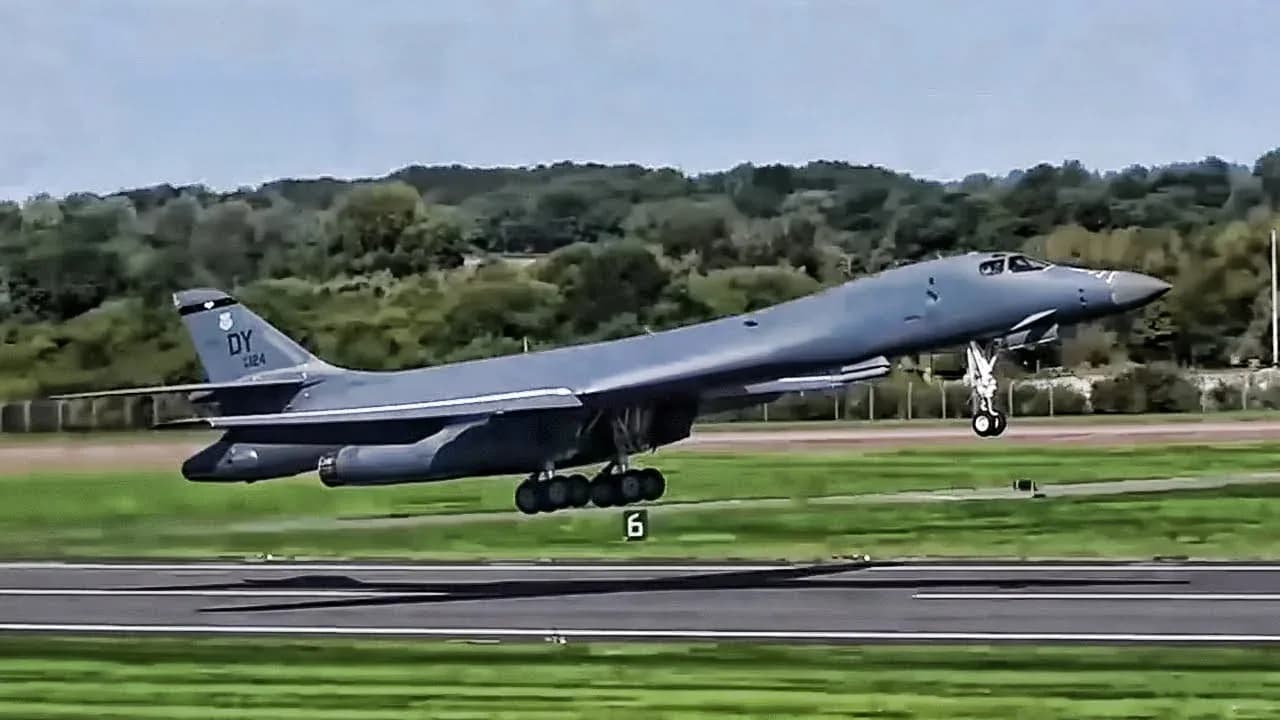
For most of 2026, RAF Fairford in western England has been the busiest American bomber base outside the United States. As of Sunday, October 4, it is empty of bombers. The Pentagon confirmed that every US bomber deployed to RAF Fairford has returned to its home station in the United States, one week after British police declared a major incident near the base's perimeter.
The short version: the aircraft are gone, the Pentagon says the bomber force can still strike anywhere from American soil, and nobody in Washington or London has officially said the two events are connected, even though almost everyone reporting on it believes they are.
Here is what is confirmed, what is still unclear, and what the move actually means in practice.
What happened at RAF Fairford
The sequence runs across eight days.
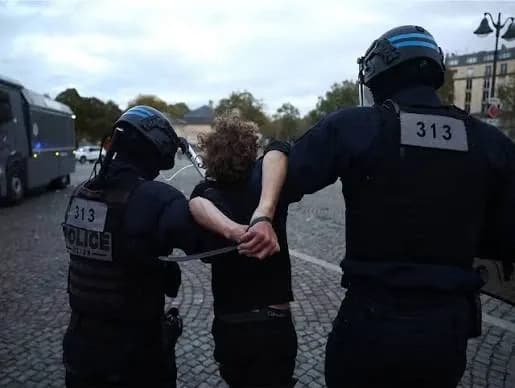
September 27. Police were alerted to three suspicious vehicles near the airbase in Gloucestershire and declared a major incident. Five men aged 23 to 25, all UK nationals from London, were arrested in the early hours after the vehicles were reported traveling toward the base. UK officials later said no improvised explosive devices were found, though a quantity of gasoline was recovered. US removes all bombers from RAF Fairford base - AOL +2
The following days. The five were arrested on suspicion of explosives offenses and then preparing a terrorist act before being released on bail, which police described as an "investigative decision." Prime Minister Andy Burnham said there were strong indications Iran played a part, without giving details, and Tehran strongly denied any involvement. A sixth man, a 25-year-old UK-Iranian national, was arrested in London on Thursday and was also released on bail by Saturday. US removes all bombers from RAF Fairford base - AOL +2
October 4. Aviation watchers saw a group of B-1 bombers leave the base on Sunday, and the Pentagon issued its statement that evening. About a dozen B-1 bombers were among the aircraft removed, according to a US official who spoke to Fox News.
Did the US say why?
No. The US gave no reason for the withdrawal. That silence is the most important gap in this story, and readers should hold it in mind when they see headlines that treat the connection as settled.
What reporting does support is this: Whitehall sources have not disputed that the decision was a response to the incident, and the BBC was told it was a military rather than political decision, taken at an operational level. The timing, one week after a security scare, makes the inference reasonable. It is still an inference.
The Pentagon's statement was careful to frame the move as a repositioning rather than a retreat. It said the bomber force, including B-1s, B-2s, and B-52s, remains ready to deliver precision global strike, including through operations that launch and recover from the continental United States.
Why RAF Fairford matters so much to US bombers
To understand why this is a bigger deal than moving a dozen planes, you need to know what the base does.
RAF Fairford is the only European forward operating location for American heavy bombers. The US Air Force has used it as a forward operating location for decades, and bomber rotations through Europe have occurred regularly since 2018 to maintain readiness and sustain deterrence. US bombers leave RAF Fairford after suspected Iran-linked terror plot +2
In plain language, a "forward operating location" is a base close to where the fighting is, so aircraft can reach targets quickly, fly more missions, and come back to a safe runway. The United States has no other base in Europe built to handle B-1s, B-2s, and B-52s at this scale.
That mattered enormously once the Iran war began. The United States has been at war with Iran since February. Then-Prime Minister Keir Starmer approved US use of RAF Fairford and Diego Garcia for what he called defensive action against Iranian missile sites. Aviation trackers have since observed dozens of B-52 and B-1 bombers operating from the base. US bombers leave RAF Fairford after suspected Iran-linked terror plot +2
One private intelligence analyst told the BBC that shuttling from RAF Fairford is far more efficient than the lengthy commute from the US to Iran and back. The base cut thousands of miles off each mission. It also put the base on Iran's map: in July, Iran said any base used for aggression against its territory constitutes a legitimate target.
What the withdrawal changes, and what it doesn't
This is where most coverage stops, so here is a practical breakdown.
What changes
- Mission distance. Bombers flying from US bases to the Middle East face a round trip measured in many hours, with multiple aerial refuelings. The B-2 has done this before, but it is slower, more expensive, and more tiring for crews than operating from England.
- Sortie rate. Fewer missions per aircraft per week are possible from Texas, Missouri, or North Dakota than from a base a few hours from the target.
- Visibility. Fairford operations were watched daily by plane spotters and trackers. Missions launched from the US interior are harder to observe in advance.
What does not change
- Capability. The Pentagon's point about striking from the continental US is not spin. The B-2 was designed for exactly that profile, and B-52s and B-1s have flown long-range missions with tanker support for decades.
- The base itself. RAF Fairford remains a US-operated facility. Nothing in any official statement suggests it is closing or that support personnel have left.
- The alliance. President Trump said the UK had worked with the US very closely on the matter, even while expressing surprise at the bail decisions.
Where this fits in the broader war depends on what Washington decides next. Daily US Wire has covered the ongoing standoff, including Trump rejecting Iran's cease-fire proposal on the Strait of Hormuz. A longer flight to the target does not end a bombing campaign, but it does change its tempo.
How to read the next week of coverage
Because so much here is unconfirmed, a short checklist helps separate reporting from speculation.
- Watch for an official cause. As of October 5, neither the Pentagon nor the UK Ministry of Defence has stated why the bombers left. The British Ministry of Defence declined to comment. Any article claiming a definitive reason is going beyond the record.
- Treat "Iran did it" as an allegation. Secretary of State Marco Rubio said the incident clearly involved a foreign actor, and the British prime minister pointed to Iran. Neither has published evidence, the suspects have not been charged, and Iran denies it.
- Distinguish bail from release without charge. The six men were bailed, which in British practice means the investigation continues. It is not the same as being cleared.
- Note whether bombers return. Rotations through Fairford have been routine for years. A new deployment in the coming weeks would tell you more about the Pentagon's threat assessment than any statement.
What this means for American readers
The practical takeaway is that the war with Iran is now reshaping where US bombers live, not just where they fly. A suspected plot that recovered gasoline rather than explosives, and that has produced no charges so far, was still enough to move an entire bomber presence across the Atlantic. That tells you how seriously US commanders are treating threats to overseas bases.
If you want to follow this story, the most reliable signals will come from UK counter-terror police updates on the six suspects and from US Air Forces in Europe announcements about any future bomber task force deployments. Everything else, for now, is interpretation.