The Lufthansa Frankfurt fuel shortage story raises an immediate question for travelers: should you change a flight through Germany? The information available does not justify assuming your trip will be canceled. On October 15, 2026, Lufthansa said it was loading extra fuel before selected flights reached Frankfurt as a precaution, while Fraport said the airport remained operational.
For passengers, the useful distinction is between an airline adjusting fuel purchases and an airport being unable to handle flights. Here is what the reporting establishes, how the response works, and what to check before departure.
What is confirmed about the fuel situation?
Reuters reported that Lufthansa linked tighter supplies to reduced pipeline capacity. Fraport, Frankfurt Airport’s operator, said scheduled pipeline maintenance had been incorporated into its planning, with alternative supply routes and substantial storage available.
Lufthansa did not expect flight cancellations at the time of that report. These Lufthansa Frankfurt fuel shortage statements describe conditions on October 15; they are not a guarantee about every subsequent departure.
The Lufthansa Frankfurt fuel shortage headline therefore needs context. A precautionary fueling instruction does not establish that airport tanks are empty or that passenger services have stopped.
Why Lufthansa is bringing fuel into Frankfurt
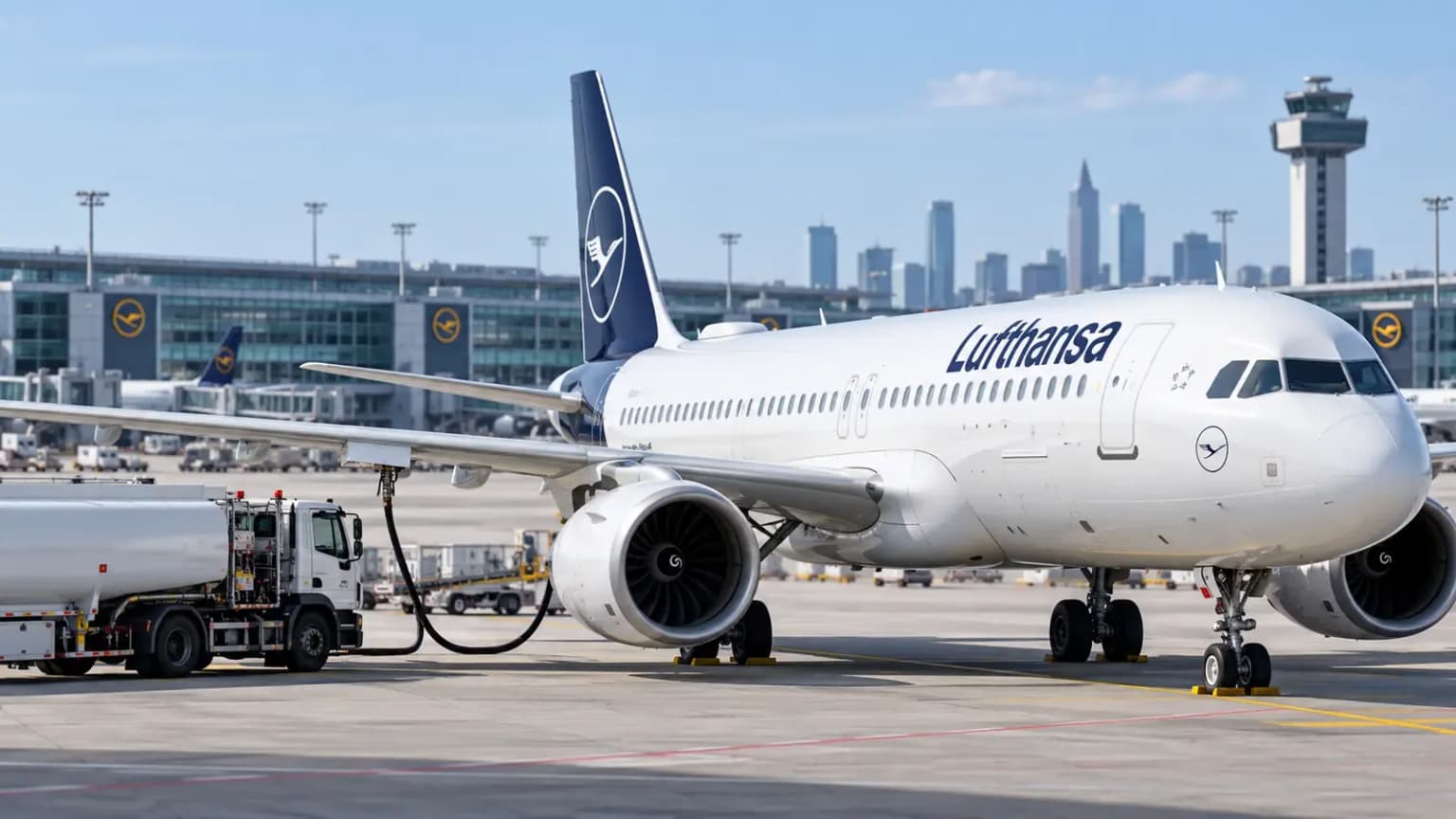
The Lufthansa extra fuel directive shifts some refueling activity to other airports. Aircraft arrive carrying fuel that can reduce how much they need to take on before their next departure.
This practice is called fuel tankering. EUROCONTROL describes it as carrying additional fuel to reduce or avoid refueling at the destination.
A hypothetical example helps explain the logic. Imagine an aircraft flying from another European city to Frankfurt before continuing elsewhere. If it carries suitable additional fuel on the first journey, it may need a smaller uplift in Frankfurt for the second. This example illustrates the mechanism; it is not a description of a specific Lufthansa flight.
The practical aim of the Lufthansa Frankfurt fuel shortage response is to reduce dependence on local refueling while maintaining the schedule. It does not create more fuel overall; it changes where the aircraft obtains it.
What is known about the affected flights?
According to Bild’s internal-instruction reporting, summarized by Reuters, the measures concerned selected routes, particularly shorter flights, with some longer services also involved. Reuters also relayed a reported eight-ton additional-fuel limit for Airbus A320-family aircraft.
That figure should not be interpreted as the amount carried by every aircraft. It is a reported ceiling, not a universal loading instruction.
German public broadcaster Tagesschau separately reported that flight planning was intended to avoid restrictions on passengers or cargo from the additional weight. It also said Lufthansa considered the precautions effective and expected to discontinue them in the foreseeable future, without providing a firm end date.
For readers following Lufthansa Frankfurt fuel shortage updates, a route-specific notice is more useful than assuming the same instruction applies across the airline’s network.
Why carrying extra fuel has a trade-off
Tankering can help an airline manage refueling needs, but transporting fuel also requires energy. EUROCONTROL’s research explains that the additional weight increases fuel consumption and carbon dioxide emissions.
In the Lufthansa Frankfurt fuel shortage, that creates a practical balance: reducing reliance on refueling at one airport comes with an efficiency cost during the incoming flight. The relevant question is how much additional fuel is useful for the aircraft’s planned operation.
No verified calculation reviewed for this article establishes the extra emissions or total financial cost of Lufthansa’s current measures. Applying an industry-wide average to this event would give readers a misleading impression of precision.
The Lufthansa Frankfurt fuel shortage response should therefore be understood as an operational precaution with a trade-off, rather than an efficiency improvement.
What travelers should do before departure
Start with your actual reservation. Lufthansa’s official flight-status page says its information is current and is the same information used by its service centers. Its app also provides journey updates.
Use this checklist if the Lufthansa Frankfurt fuel shortage news affects an upcoming trip:
- Check the flight number and travel date. An airport-wide headline cannot tell you whether your particular departure has changed.
- Review every segment. If your itinerary connects in Frankfurt, check both the incoming flight and the onward service.
- Keep your contact information current. Make sure the airline can reach you through the booking details you provided.
- Read any airline notification before purchasing alternatives. Establish what has changed and which options are offered.
- Save relevant messages. If a schedule change occurs, retain the notification and any written instructions.
A hypothetical traveler flying from the United States through Frankfurt should check both flights even if the first remains on time. An unchanged arrival does not, by itself, establish the status of the connecting departure.
Should you rebook now?
The Lufthansa Frankfurt fuel shortage story alone is not a sufficient reason to buy another ticket. A more useful decision framework is to match your response to the information attached to your booking.
If both flights remain scheduled and you have received no change notice, continue monitoring them. If a departure time changes, examine whether your connection still works and ask the airline about the itinerary. If the airline cancels a segment, review its offered options before committing to a replacement.
These are planning steps, not a promise that disruption cannot occur. They help avoid an expensive reaction to a headline that may not describe your flight.