An unexpectedly high reading can leave you wondering what causes high blood pressure: too much salt, a stressful week, your family history, or something else. Usually, several factors contribute over time. Sometimes an underlying condition or medication is responsible.
The first step is to establish whether your pressure stays high. One reading cannot tell you the cause, and feeling well does not rule out a problem. Here is how to understand the risks, check accurately, and decide when to get help.
This article provides general information for adults, not an individual diagnosis or treatment plan.
Primary vs. secondary hypertension
Doctors investigating what causes high blood pressure distinguish between two main types:
- Primary hypertension is the most common. It develops gradually without one identifiable cause, with inherited susceptibility, aging, and everyday habits contributing.
- Secondary hypertension results from another condition or certain medicines. Treating the underlying problem may improve blood pressure.
Kidney disease, thyroid problems, and sleep apnea are among the conditions worth discussing with a clinician. A diagnosis should guide treatment; guessing which factor is responsible can delay useful care.
Common high blood pressure risk factors
Family history and aging
Is high blood pressure hereditary? Family history increases your risk, but it does not guarantee that you will develop hypertension. Blood vessels also become stiffer with age, which helps explain why blood pressure often rises over time.
When considering what causes high blood pressure in your family, mention affected parents or siblings at your appointment. Regular checks remain useful even if you exercise and feel healthy.
Salt, activity, body weight, and alcohol
Does salt increase blood pressure? Excess sodium can make the body retain water and contribute to higher pressure. Sensitivity varies, so the same diet will not affect everyone equally.
Other established risk factors include physical inactivity, overweight or obesity, and drinking too much alcohol. Tobacco can temporarily raise pressure and damage arteries. These factors often overlap.
Understanding what causes high blood pressure should lead to practical changes, not blame. Start by comparing sodium amounts per serving on foods you regularly buy. For broader shopping context, see our guide to ultra-processed foods and your health.
Stress and temporary spikes
Can stress cause high blood pressure? Stress hormones can make your heart beat faster and narrow blood vessels, temporarily raising pressure. The relationship between chronic stress and lasting hypertension is more complicated and remains under study. Stress can also encourage heavier drinking and less healthy eating.
If you are asking what causes high blood pressure after a difficult day, stress may help explain that reading. It should not become the default explanation for repeatedly high measurements.
Sleep apnea and other medical conditions
Obstructive sleep apnea repeatedly disrupts breathing during sleep and is associated with high blood pressure. Loud snoring, gasping, and excessive daytime sleepiness are reasons to discuss a sleep evaluation.
A review of what causes high blood pressure should include sleep, especially when treatment is not controlling the numbers. Kidney disease and hormone disorders also deserve consideration; lifestyle habits are not the only possible explanation.
Medications that can raise blood pressure
Some familiar products can contribute, including:
- NSAID pain relievers such as ibuprofen and naproxen.
- Decongestants used for a stuffy nose.
- Certain antidepressants.
- Hormonal birth control pills.
- Systemic corticosteroids, such as prednisone.
When discussing what causes high blood pressure with your clinician, bring a list of prescriptions, nonprescription medicines, and supplements. Include how often you use them. Ask a pharmacist about safer options where appropriate, but do not stop prescribed treatment on your own.
Can you have high blood pressure without symptoms?
Yes. Hypertension usually produces no noticeable symptoms, even while increasing the risk of damage to the heart, brain, or kidneys. Waiting for headaches or dizziness is not a reliable screening strategy.
Learning what causes high blood pressure is useful, but measurement is what reveals whether your own numbers need attention. Appearance, fitness, and how energetic you feel cannot substitute for a check.
Understanding blood pressure readings
The upper number, systolic pressure, measures pressure when the heart contracts. The lower number, diastolic pressure, measures it between beats. Both are reported in millimeters of mercury, or mm Hg.
These are the standard US adult categories:
| Category | Systolic: upper number | Relationship | Diastolic: lower number |
|---|---|---|---|
| Normal | Below 120 | AND | Below 80 |
| Elevated | 120–129 | AND | Below 80 |
| Stage 1 hypertension | 130–139 | OR | 80–89 |
| Stage 2 hypertension | 140 or higher | OR | 90 or higher |
Use the higher category when the numbers fall into different groups. For example, 128/92 falls into stage 2 because of the lower number. A clinician confirms the diagnosis using repeated measurements. MedlinePlus
UK readers: NHS diagnostic thresholds differ. High blood pressure is generally identified at 140/90 or higher in a clinic, or 135/85 or higher at home, with confirmation as needed. NHS
The category describes the reading; it does not explain what causes high blood pressure in a particular person or automatically determine treatment.
How to check blood pressure at home
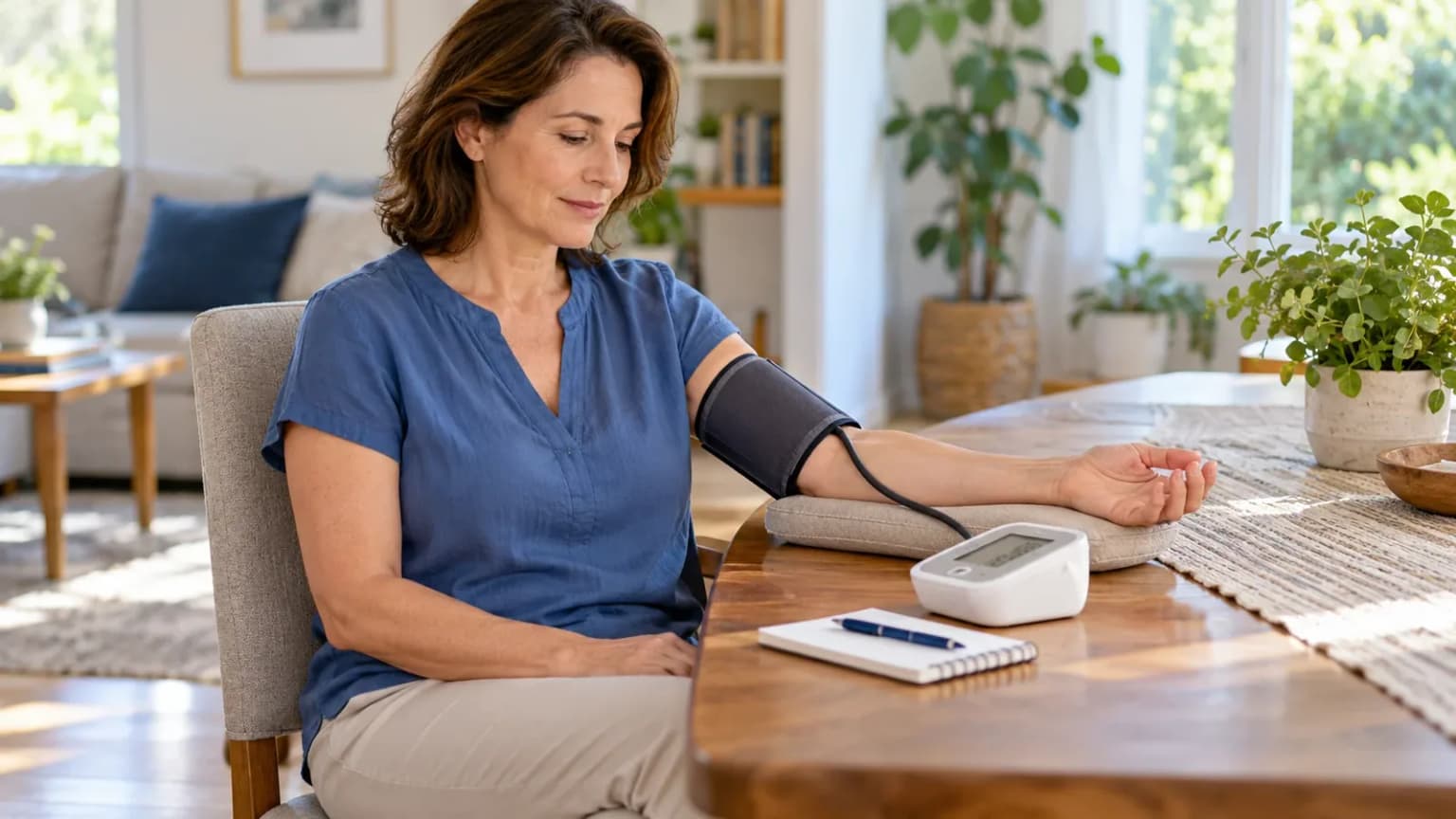
Choose a validated automatic upper-arm monitor with a cuff that fits your arm. Bring it to an appointment so your clinician can check your technique and compare readings.
To measure blood pressure correctly:
- Avoid smoking, caffeine, and exercise for 30 minutes beforehand.
- Empty your bladder.
- Sit quietly for at least five minutes, with your back supported and feet flat on the floor.
- Put the cuff on bare skin and support your arm at heart level.
- Stay quiet and still; do not talk or use your phone.
- Take two readings one minute apart and record both.
Measure at consistent times and ask your clinician how often and for how many days to record results. Note the date, time, readings, and relevant circumstances. American Heart Association
Before assuming what causes high blood pressure from a home result, check the setup. An incorrectly sized cuff, unsupported arm, or measurement taken without resting can distort the picture.
Smartwatch estimates should not replace a validated cuff. The 2025 US guideline advises against relying on cuffless devices until their precision and reliability improve.
A worked example: interpreting a high home reading
Hypothetical example: An adult records 146/92 immediately after coffee while talking on the phone. Later, after appropriate preparation, readings are 134/84 and 132/82.
Those later readings are lower, but they still fall in the US stage 1 category. They do not establish a diagnosis or prove that coffee was the only reason for the initial result.
Rather than deciding what causes high blood pressure from this single session, keep the complete log and discuss the pattern with a clinician. Do not repeatedly measure until you get a number you prefer.
When to see a doctor for high blood pressure
Arrange a medical review if properly taken readings repeatedly fall in a high category. Bring your log, monitor, and medication list. Home readings can help identify pressure that rises mainly in the clinic, or pressure that is high at home despite lower clinic readings.
For nonpregnant adults, use this urgent action guide:
- Above 180 systolic or above 120 diastolic, without concerning symptoms: wait at least one minute and repeat. If it remains that high, contact a healthcare professional immediately.
- That level with chest pain, shortness of breath, weakness, numbness, vision changes, or difficulty speaking: call 911 immediately. Do not wait for the pressure to fall.
Serious chest pain or stroke symptoms warrant emergency help regardless of the monitor reading. In the UK, call 999. Pregnancy and the postpartum period require separate guidance; contact your maternity team promptly about high readings.
Your next step is to collect reliable measurements and bring them to someone who can assess what causes high blood pressure in your circumstances. Ask for a clear plan covering follow-up, lifestyle changes, and whether medication is needed.