

Every week, headlines announce that Congress is "considering" or "advancing" some piece of legislation. Very few of those stories explain what that means or how close the proposal is to affecting your life. Knowing how a bill becomes a law helps you separate real developments from political theater. This guide walks through each stage of the process, explains where most proposals quietly die, and shows you how to judge whether a bill in the news has a genuine chance of passing.
What Are the Steps for How a Bill Becomes a Law?
A bill becomes a law by passing through six stages: introduction, committee review, a floor vote in the first chamber, the same process in the second chamber, reconciliation of any differences, and presidential action. Both the House and the Senate must approve identical text before the president can sign it.
Here is the path in order:
1. Introduction. Only a member of Congress can introduce a bill. It receives a number, such as H.R. 1 in the House or S. 1 in the Senate.
2. Committee review. The bill is sent to the committee that covers its subject. Members may hold hearings, rewrite sections in a "markup" session, and vote on whether to send it forward.
3. Floor vote. The full chamber debates, amends, and votes.
4. Second chamber. The other chamber repeats the process and often changes the text.
5. Resolving differences. The two versions are merged, either through a conference committee or by sending amendments back and forth.
6. Presidential action. The president signs or vetoes the final bill.
One rule worth knowing: under the Constitution, bills that raise revenue must start in the House.
Why Do Most Bills Never Become Law?
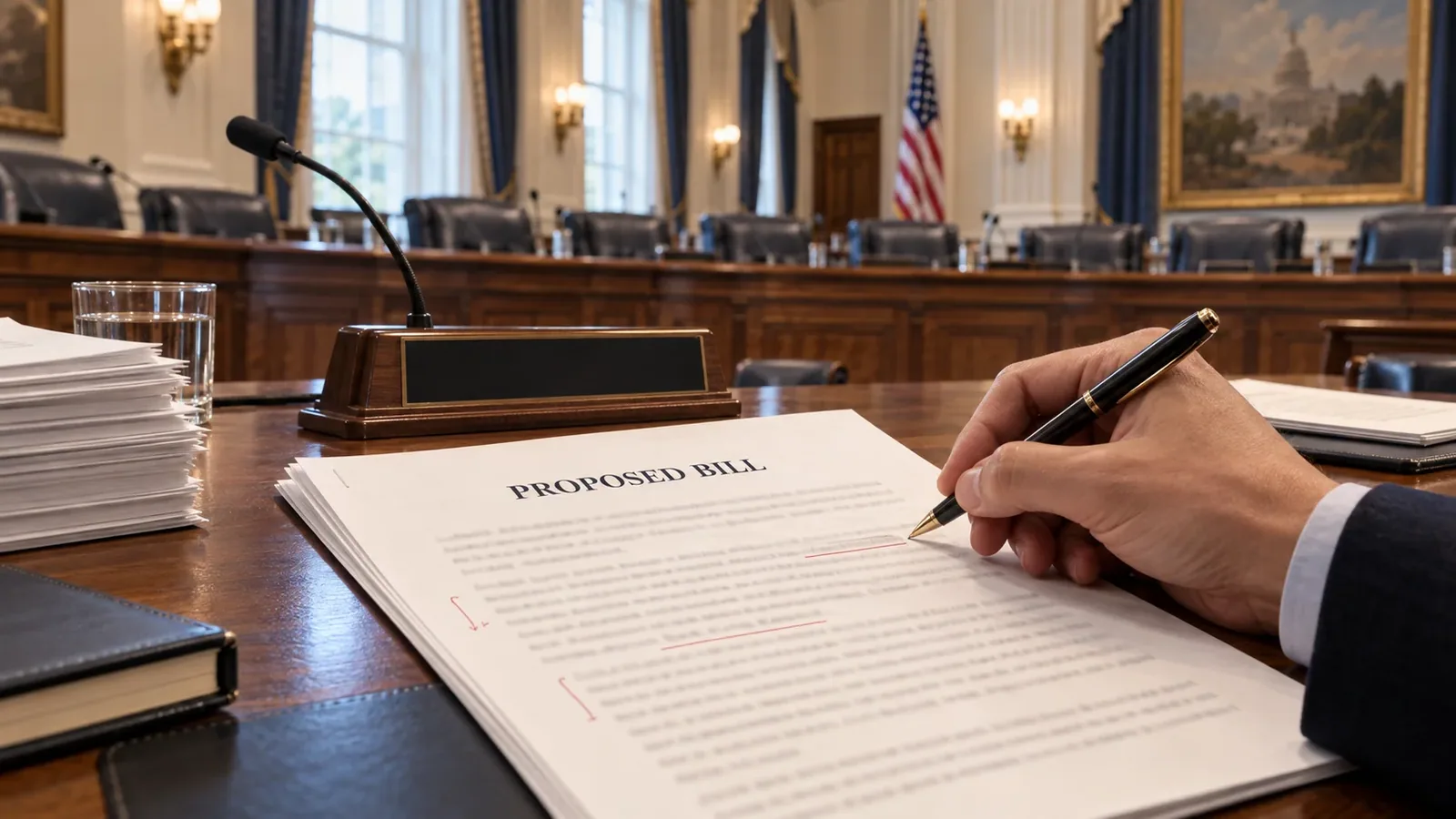
Most bills fail because committees never act on them. Thousands of bills are introduced in every two-year Congress, and only a small percentage are ever signed. Committee chairs decide which proposals get hearings, and leadership decides which reach the floor, so a bill without powerful backers usually stalls silently.
This matters for how you read the news. A headline saying a lawmaker "introduced a bill" tells you almost nothing about its odds. Many bills are introduced to send a message to voters, not because the sponsor expects a vote.
A useful real-world test is to ask three questions:
• Has the bill been scheduled for a committee markup?
• Does it have sponsors from both parties?
• Has leadership in either chamber committed floor time?
If the answer to all three is no, the bill is a statement, not a likely law.
How Does the Senate Filibuster Change the Math?
The filibuster means most legislation needs 60 votes in the Senate, not a simple majority of 51. Senators can extend debate indefinitely unless 60 members vote to end it, a step called cloture. Because one party rarely holds 60 seats, most major bills need support from both sides.
There are important exceptions. Budget reconciliation bills, which deal with spending, taxes, and the debt limit, can pass with a simple majority. Nominations for judges and executive positions also require only a majority.
This is why so many large policy changes are packaged into budget bills, and why funding deadlines carry so much drama. When the chambers cannot agree on spending, the consequences are immediate. Our explainer on how a federal government shutdown works and who feels it first covers what happens when that process breaks down.
What Happens When a Bill Reaches the President?
The president has three options: sign the bill, veto it, or take no action. A signed bill becomes law. A vetoed bill returns to Congress, which can override the veto with a two-thirds vote in both chambers. If the president does nothing for ten days while Congress is in session, the bill becomes law automatically.
There is one twist. If Congress adjourns during that ten-day window and the president has not signed, the bill dies. This is known as a pocket veto, and Congress cannot override it.
Veto overrides are rare because the two-thirds threshold is so high. In practice, a veto threat alone often reshapes a bill long before the final vote, because sponsors would rather negotiate than lose.
How Can You Track a Bill Yourself?
You can follow any federal bill for free on Congress.gov, the official legislative database. Search the bill number to see its full text, sponsors, committee assignment, and every recorded action. The "Actions" tab shows exactly where the bill stands, which is more reliable than most headlines.
A practical scenario: a small business owner hears that Congress may change a tax deduction she relies on. Instead of reacting to social media posts, she checks the bill's status, sees it has not left committee, and decides not to change her plans yet. That five-minute check replaces weeks of worry.
Legislation is only one force shaping the economy. Monetary policy often matters just as much, and our piece on what actually moves the Fed explains that side of the picture. For more coverage of Capitol Hill, browse our Congress topic page.
3. Frequently Asked Questions
1. How long does it take for a bill to become a law?
There is no fixed timeline. Emergency measures have passed in days, while complex bills can take months or years. Many are reintroduced over several Congresses before they succeed.
2. Can the president introduce a bill?
No. The president can propose and promote legislation, but only a member of the House or Senate can formally introduce it.
3. What is the difference between a bill and a resolution?
A bill creates or changes law and needs the president's signature. Simple and concurrent resolutions usually express opinions or set internal rules and do not carry the force of law.
4. What happens to bills when a Congress ends?
All pending bills expire at the end of each two-year Congress. Sponsors must reintroduce them in the next session and start again.
5. What is a continuing resolution?
It is a temporary funding bill that keeps the government operating at existing spending levels when Congress has not finished its annual appropriations bills.
6. Do state laws follow the same process?
Mostly, yes. State legislatures use a similar path of committees, floor votes, and a governor's signature, though the details and vote thresholds vary by state.
Conclusion
Once you understand how a bill becomes a law, political news becomes far easier to read. Introduction is only the starting line. Committees, floor schedules, the 60-vote Senate threshold, and the president's pen all stand between a proposal and your daily life. Before reacting to the next big headline, check where the bill actually sits. You can find more explainers like this in our News section, and you can read about our sourcing standards in our editorial policy.