
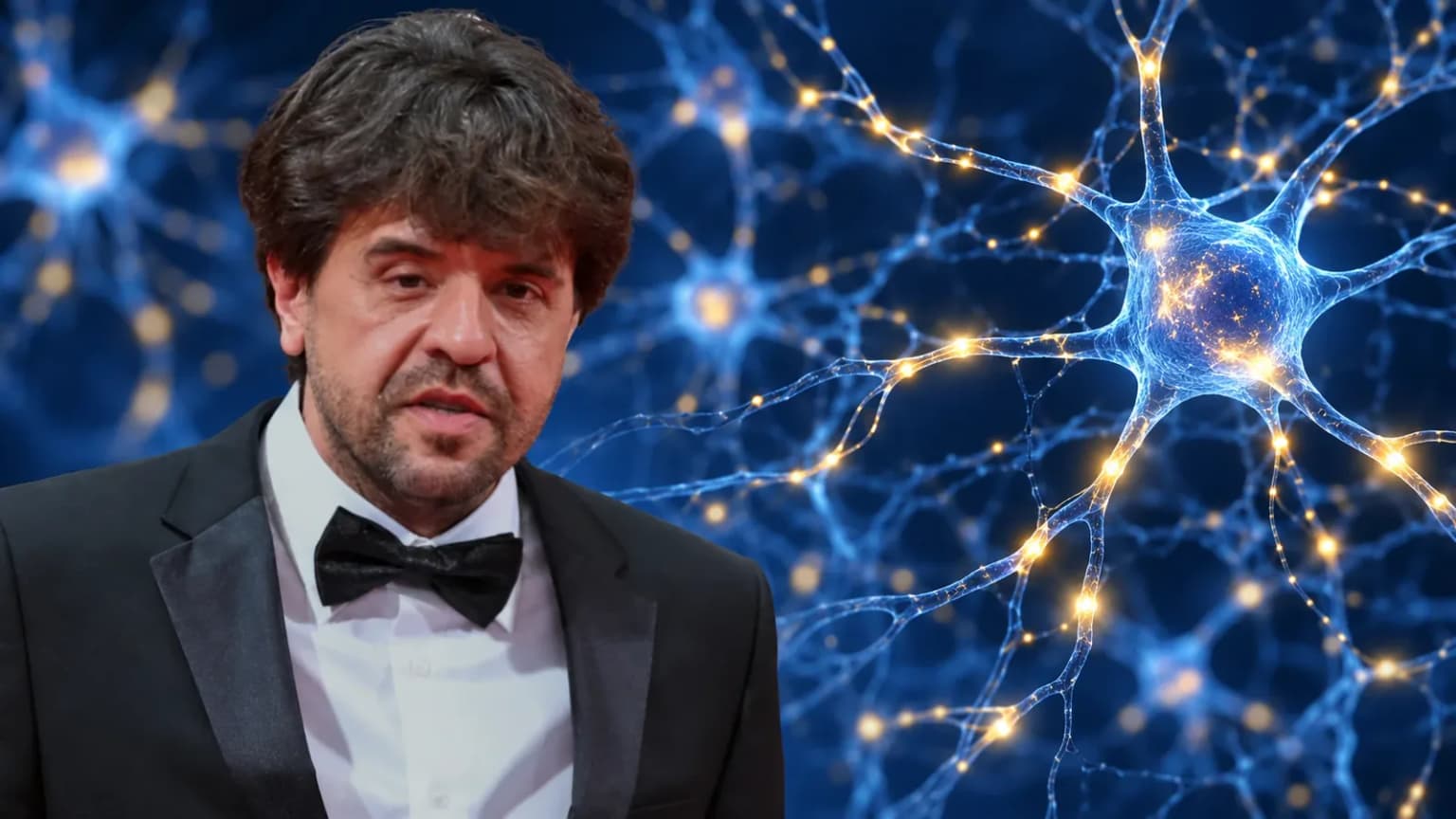
The Nobel Prize in Medicine 2026 has been awarded to Karl Deisseroth, Peter Hegemann, and Georg Nagel for discoveries that made it possible to control selected nerve cells with light. Announced October 5, the award recognizes work on light-sensitive ion channels and optogenetics, a technique that helps scientists investigate how brain circuits work.
For American readers, the announcement has a Boston connection: Deisseroth was born in the city and built his research career at Stanford. But the larger story is a scientific partnership between discoveries in microscopic algae and experiments in mammalian nerve cells.
The achievement gives researchers a powerful way to ask what particular neurons actually do. It does not, by itself, establish a new treatment for brain disease.
Who won the Nobel Prize in Medicine 2026?
The three laureates made complementary contributions to the science behind optogenetics:
- Peter Hegemann: Helped discover channelrhodopsin, a light-sensitive protein in a single-celled alga.
- Georg Nagel: Worked with Hegemann on the discovery and characterization of these light-controlled channels.
- Karl Deisseroth: Developed ways to use the protein as a light-controlled switch in nerve cells.
The official award is the Nobel Prize in Physiology or Medicine. Its recognition of optogenetics connects basic research into how organisms respond to light with a method for investigating the nervous system.
Karl Deisseroth’s Boston connection
Deisseroth’s Massachusetts roots are documented in a Stanford Medicine profile. He attended Harvard before earning his neuroscience doctorate at Stanford in 1998 and his medical degree there in 2000. He also trained in psychiatry.
That combination helps explain the direction of his research: understanding the biological machinery behind experiences, behavior, and psychiatric illness.
The Nobel Prize in Medicine 2026 brings new attention to that work, but the experiments developed over decades. Stanford describes a 2005 milestone in which Deisseroth and colleagues used a light-sensitive microbial protein to make cultured neurons respond to light.
The history also includes many researchers beyond the three laureates. Recognizing the winners should not obscure the contributions of collaborators who helped establish and expand the technique.
What is optogenetics, and how does it work?
Optogenetics combines genetic tools with controlled light. Scientists arrange for selected cells to produce a light-sensitive protein, then illuminate those cells to change their electrical activity.
The science behind the Nobel Prize in Medicine 2026 is easier to understand in three steps:
- Give selected cells a light-sensitive component. Researchers introduce genetic instructions that enable the cells to produce a particular protein.
- Deliver the appropriate light. Depending on the protein and experimental design, light changes the movement of electrically charged particles across the cell membrane.
- Measure the effect. Scientists examine changes in nerve signals, circuit activity, or behavior.
Channelrhodopsins act as tiny gates in a cell’s outer membrane. Certain wavelengths of light open those gates, allowing ions to pass through. In a suitably prepared neuron, that can trigger an electrical signal.
Other optogenetic tools can suppress activity. Being able to increase or reduce activity gives researchers different ways to test a circuit’s role.
Crucially, light alone is not enough. The targeted cells must first contain the appropriate light-sensitive machinery.
Why controlling neurons changes brain research
The importance of the Nobel Prize in Medicine 2026 lies partly in the difference between watching an event and testing what causes it.
If neurons become active while an animal performs a task, that observation establishes an association. It does not automatically show whether those neurons drive the behavior, respond to it, or participate in another process happening simultaneously.
Optogenetics lets researchers intervene in selected cells while measuring what happens next. Its combination of cellular targeting and precise timing makes it particularly useful for separating those possibilities.
A hypothetical experiment
Imagine researchers notice that a group of neurons becomes active when a mouse approaches food.
They could use optogenetics to reduce that group’s activity during the approach, then compare the result with suitable control conditions. If approaching food becomes less likely, the finding would support a role for those cells under those experimental conditions.
It would not prove that scientists had found a single “hunger switch.” Changes in movement, attention, or motivation could also affect the result. Additional experiments would be needed to distinguish those explanations.
This is why the Nobel Prize in Medicine 2026 matters beyond striking images of illuminated neurons: the method helps researchers ask more specific questions, while still requiring careful interpretation.
What has optogenetics helped scientists investigate?
Researchers have applied optogenetics to questions involving memory, perception, motivation, and the brain circuits implicated in neurological and psychiatric disorders.
Stanford has described applications in research on addiction, depression, Parkinson’s disease, pain, and stroke. These are areas of investigation; listing them does not mean optogenetics has cured those conditions.
The Nobel Prize in Medicine 2026 also highlights the value of studying organisms with no obvious connection to a hospital. Understanding a light-responsive protein in algae supplied a tool that neuroscientists could adapt to an entirely different biological problem.
Has it helped human patients?
One notable clinical example comes from vision research. A study published in Nature Medicine in 2021 reported partial recovery of visual function in a patient with retinitis pigmentosa, a degenerative eye disease.
The researchers combined an injection delivering genetic instructions for a light-sensitive protein with specially engineered goggles. With the treated eye and goggles, the patient could perceive, locate, count, and touch certain objects.
The result had important limits: it involved partial recovery, and the reported object-detection ability depended on the goggles. It was not restoration of normal sight.
For readers following the Nobel Prize in Medicine 2026, this distinction is essential. A promising human result answers a narrower question than whether a treatment reliably helps a broad patient population.
What should readers watch for next?
Future reports about the Nobel Prize in Medicine 2026 may connect optogenetics to new therapies. Three questions can help readers evaluate those claims:
- Where was the result demonstrated? A cell culture, an animal experiment, and a human clinical study provide different kinds of evidence.
- What actually improved? A change in a laboratory measurement is different from a meaningful improvement in daily life.
- What did the intervention require? Genetic delivery, light-delivery equipment, and follow-up all matter when judging practical use.
The next meaningful advance will be defined by the evidence behind it: a clearer explanation of a brain circuit, a reproducible experimental finding, or a carefully tested benefit for patients. The Nobel Prize in Medicine 2026 recognizes the discoveries that made those investigations possible