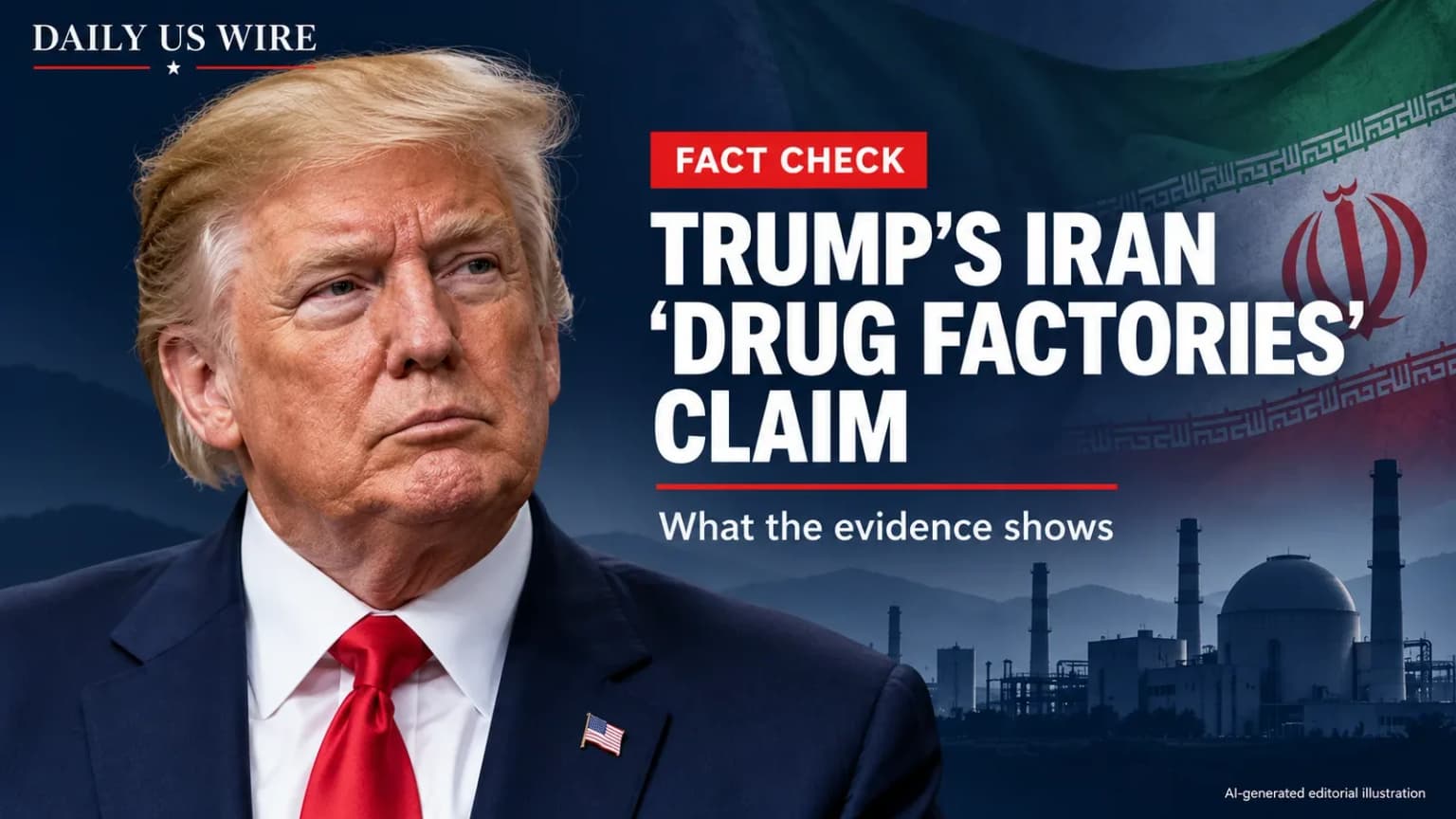
The Trump Iran drug factories claim raises a straightforward question: did the United States bomb Iranian nuclear facilities that also manufactured drugs? The public sources reviewed for this article do not substantiate that allegation. They document nuclear activities at the targeted sites, while President Donald Trump supplied no supporting evidence in his October 1, 2026, rally remarks.
That distinction matters. A president making an allegation is a reportable event; the allegation becoming an established fact requires evidence. Here is what Trump said, what international nuclear records show, and what remains unanswered as of October 3, 2026.
What Trump said in Oklahoma
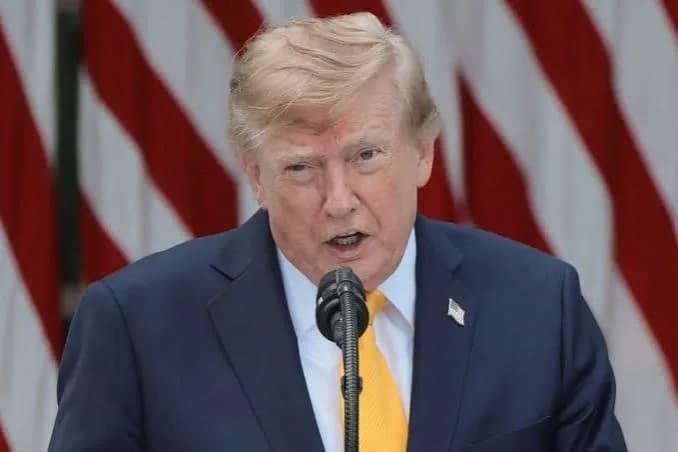
Speaking in Durant, Oklahoma, Trump described American bombers attacking Iran and referred to their targets as “drug factories.” He continued: “They were doing drugs, but they were doing the nuclear.” The passage appears around 51 minutes into the Factba.se transcript published by Roll Call.
The Trump Iran drug factories claim was not accompanied by a named substance, a production record, or an intelligence finding. Trump repeated the connection between drugs and nuclear activity without explaining what that connection supposedly involved.
Earlier in the speech, he had discussed drug trafficking and Venezuela before turning to Iran. That sequence provides context, but it cannot establish whether his subsequent wording was a mistake or a deliberate assertion.
What Operation Midnight Hammer targeted
Operation Midnight Hammer was the American operation against Fordow, Natanz, and Isfahan in June 2025. In the Pentagon’s June 22 briefing, officials described a mission to destroy or severely degrade Iran’s nuclear program. The stated objective concerned nuclear capabilities, not narcotics production.
This is the historical record against which the Trump Iran drug factories claim should be tested. A later description of a military operation does not, by itself, establish an additional purpose for its targets.
The International Atomic Energy Agency, or IAEA, separately documented the facilities’ nuclear functions. Its June 23, 2025, statement described the following:
| Site | Activity identified by the IAEA |
|---|---|
| Fordow | Uranium enrichment, including enrichment to 60% |
| Natanz | Uranium enrichment at the Fuel Enrichment Plant |
| Isfahan, also spelled Esfahan | Uranium conversion and tunnels used to store enriched material |
Those descriptions establish why these locations appear in reporting about Iran’s nuclear program. They do not establish that the facilities manufactured illegal drugs.
What the evidence supports and what it does not
The appropriate assessment of the Trump Iran drug factories claim is unsubstantiated by the public evidence reviewed. That wording identifies the problem without pretending to know everything that may exist in classified files.
Three separate questions should remain separate: whether the sites had nuclear functions, whether the strikes damaged them, and whether drugs were produced there. Evidence supporting either of the first two propositions does not automatically support the third.
Nor does the absence of a narcotics reference in a nuclear report amount to an exhaustive investigation of every possible activity. The IAEA documents cited here concern nuclear monitoring. They are valuable evidence about the facilities, but they should not be misrepresented as dedicated drug investigations.
The burden of supporting the Trump Iran drug factories claim rests with whoever makes it. Readers do not need to disprove every imaginable explanation before asking for documentation.
Could “drugs” mean legitimate nuclear medicine?
There is a real connection between nuclear technology and medicine. The IAEA explains that radiopharmaceuticals are medicines containing radioactive forms of chemical elements. They can help doctors diagnose disease or treat conditions such as cancer and hyperthyroidism.
That scientific fact does not validate the Trump Iran drug factories claim. It establishes that nuclear medicine exists, not that a particular bombed facility produced medicines or illegal narcotics.
To support a medical interpretation, evidence would need to identify the relevant facility and its actual production activity. Simply substituting a lawful meaning of “drugs” after the statement leaves that essential connection unproven.
In CNN’s analysis, republished by Egypt Independent, Carnegie nuclear expert James Acton said he knew of no drug production at Fordow. He also noted that Fordow is an enrichment center without a reactor. His comments addressed a possible explanation; they did not establish what Trump intended.
Has the White House supplied an explanation?
CNN reported that it asked the White House about the remarks on October 2. An aide directed the outlet back to Trump’s comments without providing an explanation.
That response did not add evidence supporting the Trump Iran drug factories claim. It also did not resolve whether the president intended to describe narcotics, medicines, or something else.
Calling the wording a possible verbal mistake is an interpretation. Presenting that interpretation as confirmed would go beyond the available record. Similarly, describing the speech as a documented new military rationale would require more than an unexplained rally passage.
Do not confuse this allegation with the damage debate
The Trump Iran drug factories claim concerns what happened inside the facilities before they were attacked. Assessing damage concerns what the strikes did to them. These are different evidentiary questions.
Immediately after the strikes, IAEA Director General Rafael Grossi said substantial damage at Fordow was expected but that underground damage could not yet be fully assessed. A September 2025 IAEA report also described limits on inspectors’ access and their ability to account for nuclear material following the attacks.
Those were dated assessments, not a complete description of conditions today. More fundamentally, uncertainty about damage cannot supply missing evidence of drug manufacturing. A photograph of a damaged building might help establish destruction; without additional evidence, it cannot establish everything previously produced inside.
For related regional context, see Daily US Wire’s coverage of Saudi Arabia’s nuclear position.