
If you saw the headline that President Trump declared an "energy ceasefire" between Russia and Ukraine on Sunday, October 11, and then saw that a Ukrainian power plant was burning a few hours later, you are probably asking the obvious question: is there an energy ceasefire or not?
The short answer, as of Monday, October 12: there is a declaration, not a verified agreement. Trump announced it on social media. Ukraine said it was hearing about it for the first time but would honor it if Russia did. Russia had not publicly confirmed anything. And on Sunday evening, Ukrainian officials reported strikes on the CHP-5 thermal power plant in Kharkiv, Ukraine's second-largest city.
This article walks through what was actually said, what happened in Kharkiv, why announced energy truces in this war have repeatedly fallen apart, and what Americans should watch for before treating the next headline as settled.
What Trump actually announced
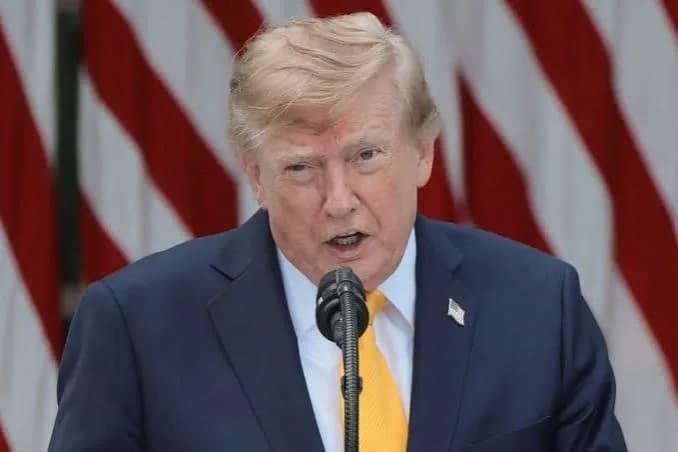
On Sunday, October 11, Trump posted a short message on Truth Social saying an energy ceasefire between Russia and Ukraine was in effect immediately, that both parties had agreed, and warning them not to break it. That was the whole announcement. According to the Associated Press, the post contained no details on terms, duration, verification, or which facilities were covered, and neither Moscow nor Kyiv immediately confirmed any such deal.
An "energy ceasefire" in this context is narrower than a general ceasefire. The fighting on the front line continues. What stops, in theory, is each side's long-range campaign against the other's energy system: Russia's missile and drone strikes on Ukrainian power plants, substations and gas facilities, and Ukraine's drone strikes on Russian oil refineries, depots and, lately, other infrastructure.
Ukraine's response: news to us, but yes
President Volodymyr Zelenskyy's reaction to the energy ceasefire had two parts. First, Ukraine was not party to the announcement. A senior official in his office told ABC News that Zelenskyy learned of it from social media, and he told Axios the deal was news to him. Second, Ukraine would accept it anyway. In his evening address he said Ukraine was ready to stop striking Russian energy infrastructure and expected the same readiness from Russia, per the AP.
That position was not new. Earlier the same day, on ABC's "This Week," Zelenskyy had said Kyiv would halt its refinery strikes if Moscow stopped hitting Ukraine's grid, and asked Trump to press the Kremlin on exactly that point. So the sequence on Sunday was: Zelenskyy proposes a mutual halt on TV, Trump declares one as already agreed, Ukraine says it will comply, and the Kremlin says nothing.
Russia's response: silence, so far
As of the AP's Monday morning update, Moscow had not commented. That matters more than it might seem. In this war, an energy truce only functions if the Russian military receives and follows an order to stop, and the only reliable evidence of that is the absence of strikes over a sustained period. A social media post from Washington does not substitute for a Kremlin statement, and a Kremlin statement does not substitute for quiet skies.
What happened in Kharkiv
On Sunday evening, Ukrainian time, Russia struck the CHP-5 combined heat and power plant in Kharkiv. A local official told ABC News the plant was hit at least twice and caught fire. Zelenskyy mentioned the attack directly in his nightly address, and his office confirmed to the AP that it came after Trump's ceasefire post. A CHP plant produces both electricity and the hot water that heats apartment blocks, which is why losing one in October, with winter weeks away, is a serious problem for a city of over a million people.
Zelenskyy also described a day in which Russian Shahed-type drones were over Ukraine continuously, along with glide-bomb strikes and other hits on energy infrastructure. State grid operator Ukrenergo reported new power cuts in the Kharkiv, Donetsk and Zaporizhzhia regions on Sunday morning, before Trump's post, due to damage from earlier attacks, according to AOL/Yahoo's report citing Ukrinform.
A few things worth keeping straight
- Source of the claim. The report that CHP-5 was hit after the announcement comes from Ukrainian officials. Independent outlets have not published their own damage assessment, and Russia has not commented. The timing claim is plausible and consistent across outlets, but it is Ukraine's account.
- The wider week. Zelenskyy said that in the preceding week alone, Russia carried out more than 200 strikes on Ukraine's power generation and transmission and 17 on gas and oil sites, per Euromaidan Press. Those are Ukrainian government figures and are not independently verified, but they show the strike on CHP-5 was not an outlier.
- Ukraine kept striking too. The AP reported that on the same Sunday, a Ukrainian drone attack shut down a Yandex data center in Vladimir, east of Moscow, the third strike on the company's facilities in four days. A data center is not an oil refinery, so it is unclear whether it would fall under any energy-only truce, but it shows neither side had paused its long-range campaign when Trump posted.
- "Immediately after" is a few hours. The AP's first report on Trump's post was published before 5 a.m. Eastern on Sunday, which is around midday in Ukraine. The CHP-5 strike was reported on Sunday evening, Ukrainian time. So "hours" is accurate; "minutes" is not.
Why energy ceasefires in this war keep failing
This is at least the fourth time since early 2025 that an energy ceasefire has been announced, and the pattern has been consistent: a declaration from Washington, partial or conditional acceptance by the two sides, and strikes within hours or days. The table below is drawn from the sources linked in each row.
|
Date announced |
Who announced it |
What was claimed |
What happened next |
|---|---|---|---|
|
Oct. 11, 2026 |
Trump, Truth Social |
Energy ceasefire in effect immediately, both sides agreed |
Kyiv said it was unaware but would comply; Moscow silent; Kharkiv CHP-5 hit that evening |
|
Sept. 14, 2026 |
Trump, social media |
Both countries agreed not to hit each other's energy infrastructure |
Kremlin called it a good idea but tied it to unhindered Russian oil exports; nothing came of it (AP, dpa) |
|
Jan. 30, 2026 |
Russia and Ukraine, after a Trump request |
One-week halt on energy strikes ahead of Abu Dhabi talks |
Both sides disagreed on the timeframe; Zelenskyy said Russia largely observed it, then a large strike wave followed in early February (Reuters, Channel 4) |
|
March 18, 2025 |
White House and Kremlin, after a Trump-Putin call |
30-day pause on energy and infrastructure strikes |
Strikes on Ukrainian energy sites reported within hours; Ukraine later logged more than 30 violations (Kyiv Post, Euromaidan Press) |
Three structural problems explain the record.
Nobody defines "energy infrastructure." Russia's readouts have tended to cover power plants and the grid. Ukraine's definition includes gas production and rail electrification. The United States has never published a list. Without one, each side can claim compliance while the other claims violations, and both can be partly right.
No one monitors an energy ceasefire. A front-line ceasefire can be watched by observers on the ground. Long-range strikes happen at night across hundreds of miles, and the only sources are the two militaries and local officials. Verification, in practice, means waiting a week and counting.
The incentives are lopsided. Ukraine's refinery campaign is one of its few ways to impose costs inside Russia and has pushed up fuel prices there. Russia's grid campaign is aimed at making Ukrainian winters unlivable. A mutual halt asks each side to give up its main form of pressure in exchange for a promise from an adversary it does not trust, which is why both have tended to say yes in principle and keep their options open in practice.
Why this is a US story, not just a Ukraine story
The timing is not random. The AP reported that on Friday, October 9, Trump struck a deal with Putin to buy Russian diesel, framed as a response to record US diesel prices ahead of the November midterms. For weeks he has pressed Zelenskyy to stop hitting Russian refineries, and on Saturday he said it was time for Ukraine to get a new president, blaming Zelenskyy for US fuel costs. Daily US Wire looked at whether that diesel arrangement can actually move prices in Trump Russia Deal to Lower Fuel Prices: Will It Work?
Seen that way, an energy ceasefire serves two US goals at once. It would keep Russian refineries running, which supports the diesel supply the administration is now counting on, and it would let the White House point to a de-escalation step before Election Day. That does not make the idea bad. A real halt on grid strikes would spare Ukrainian civilians a brutal winter. But it explains why the announcement came from Washington, in advance of either party, and why skepticism in Kyiv and European capitals was immediate. Estonia's foreign minister, for one, said the ceasefire was not working, per the AOL/Yahoo report.
For American readers, the practical point is this: the diesel price you pay this winter depends in part on whether Russian refineries keep operating, and that depends on whether Ukraine stops striking them, and that depends on whether Russia stops striking Ukraine's grid. A ceasefire that exists only in a post does not break that chain.
How to tell whether this ceasefire is real
Here is a simple checklist to apply to the next week of energy ceasefire headlines. It is not a prediction, just the evidence that would separate a working truce from a declared one.
- A Kremlin statement. Not a comment that the idea is good, which Moscow offered in September, but confirmation that an order has gone to the military. In March 2025 the Kremlin published exactly that kind of readout; it still did not hold, but it is the minimum.
- Defined terms. Any public text, from any of the three capitals, saying what counts as energy infrastructure and for how long. If the only text remains a social media post, assume the terms are whatever each side wants them to be.
- Quiet nights, counted. Ukraine's Air Force publishes daily tallies of missiles and drones launched. Watch whether targets shift away from power plants and substations for seven consecutive days. One quiet night proves nothing; Russia paused briefly in late January and resumed in force days later.
- Ukrainian restraint on refineries. Kyiv has publicly promised to stop if Russia does. If reports of refinery fires inside Russia continue after a Kremlin confirmation, the deal is failing from both directions.
- A US verification role. Whether anyone in Washington is actually tracking compliance, or whether the announcement is left to stand on its own.
Until most of those boxes are checked, the accurate description is the one the AP used on Monday: Trump says there is an energy ceasefire, Ukraine welcomes it, Russia has not confirmed it, and the strikes have not stopped.
The bottom line
As of October 12, 2026, there is no verified energy ceasefire between Russia and Ukraine. There is a US declaration, a conditional Ukrainian yes, Russian silence, and a power plant in Kharkiv that was hit after the declaration. The next few days of strike reports will tell you more than any further announcements will. If Russia confirms an order and the grid attacks stop for a week, this article will be out of date. If not, it will be the fourth announced energy truce since 2025 to fail the same way.