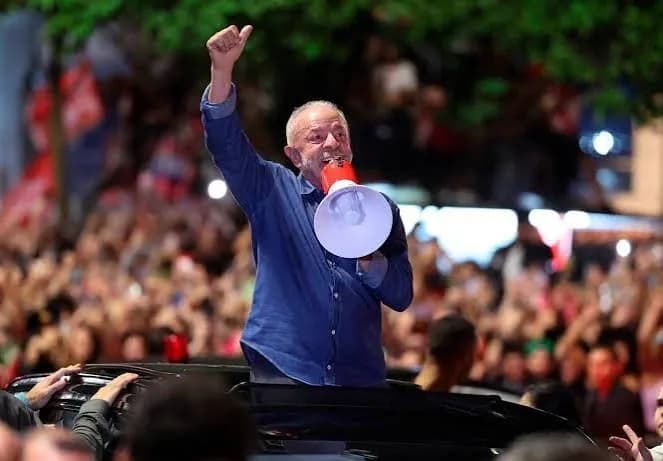
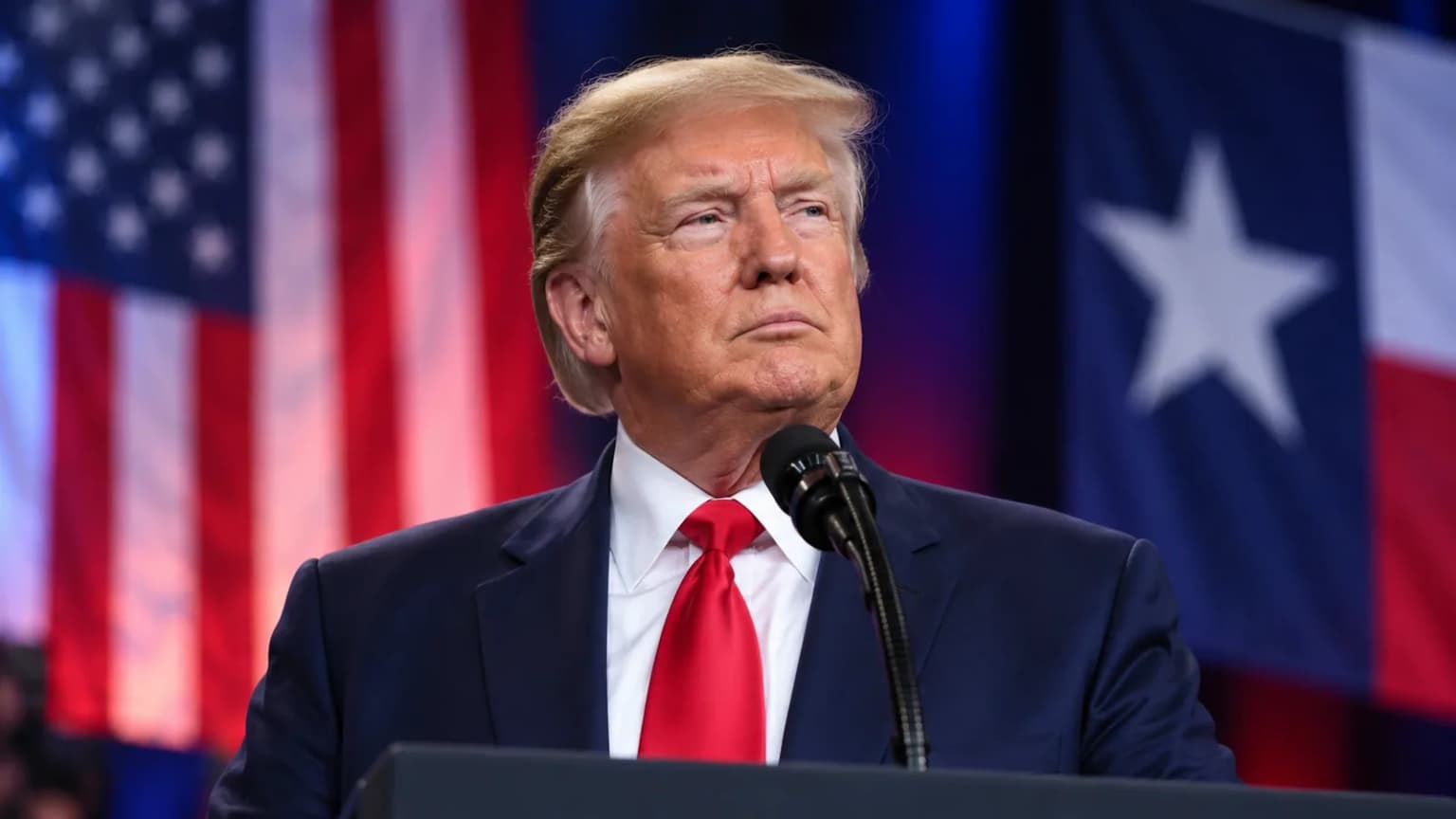
On Tuesday, 27 October 2026, the Texas Senate race made Lubbock the centre of American politics for a day. President Donald Trump spoke at the Lubbock Memorial Civic Center alongside Republican Senate nominee Ken Paxton. Less than three miles away, Democratic nominee James Talarico held his own rally a few hours later. Election Day is 3 November, one week after the rallies, so the timing was deliberate.
This was more than a split-screen photo opportunity. This contest has become one of the closest of the 2026 midterms, and its result could help decide which party controls the US Senate next year. This article explains what happened in Lubbock, who the candidates are, what the polls show and why the result matters well beyond the state's borders.
What happened in Lubbock
Trump and Paxton at the Civic Center
Trump arrived in Lubbock after an earlier speech at the Port of Corpus Christi, making it a two-stop Texas day. Newsweek reported that the Republican National Committee organised the Lubbock event, and that this was Trump's fourth trip to Texas since Labor Day.
According to the Texas Tribune, thousands of supporters gathered, some arriving before sunrise. Trump spoke for more than an hour. He argued that Democrats would weaken gun rights under the Second Amendment and that a Democratic Senate would mean more people crossing the US–Mexico border. He also attacked Talarico personally, questioning his Christian faith, and urged supporters to turn out and vote.
Texas House Speaker Dustin Burrows, a Lubbock native, also addressed the crowd. He told West Texas voters that if they stayed home, Austin and Travis County would set the state's direction.
Talarico at the Fiesta Center
Talarico's event took place at the Fiesta Center as part of what his campaign calls its "Clear Eyes, Full Hearts" tour. The campaign moved the rally from a venue on the Texas Tech campus to a larger site. According to the Texas Tribune, a campaign spokesperson said more than 4,000 people had signed up. That figure comes from the campaign and has not been independently verified.
Talarico had already held rallies in Midland and Amarillo that day. In Lubbock, he focused on the cost of housing, groceries and health care. He blamed Trump administration policies for higher prices and argued that Republicans were worried about losing the seat.
Outside the Civic Center, about two dozen protesters held signs opposing Trump and supporting Talarico. Inside, Trump's supporters booed each mention of the Democratic nominee. The two crowds reflected how sharply divided the contest has become.
Why both campaigns chose West Texas
Lubbock is not an obvious battleground. Lubbock County and the surrounding South Plains vote heavily Republican, and Democrats rarely campaign there in the final week of a statewide election. That makes the choice of venue revealing.
For Trump and Paxton, the aim was to make sure reliable Republican voters actually cast ballots. In a close statewide race, a few extra points of turnout in rural counties can offset strong Democratic margins in the cities. Burrows made that argument directly when he told the crowd not to let Austin decide for them.
For Talarico, the aim was different. He is not expected to win Lubbock County, but narrowing the gap in conservative areas could matter as much as running up the score in Houston or Dallas. His day-long swing through Midland, Amarillo and Lubbock signalled that his campaign is competing for every vote rather than writing off rural Texas. A strong showing there would strengthen his argument that a Democrat can win statewide in Texas.
Who is on the ballot
Ken Paxton (Republican)
Ken Paxton has served as Texas Attorney General since 2015. He is known nationally for multistate lawsuits against Democratic administrations. The Texas House impeached him in 2023, and the Texas Senate later acquitted him. On the campaign trail, Paxton has focused on border security, support for Trump's immigration agenda, energy production and limits on federal spending.
James Talarico (Democrat)
James Talarico is a state representative who has represented Texas House District 50 since 2018. He is a former schoolteacher. He has campaigned on lowering housing, health care and child care costs. Newsweek reports that he backs immigration reform that combines stronger border screening with a path to citizenship for long-settled undocumented immigrants and Dreamers. He also supports legalising regulated adult-use cannabis.
Ted Brown (Libertarian)
Libertarian Ted Brown is also on the ballot. He drew around 3% in a recent Emerson College poll. In a race this close, even a small third-party share could matter.
How the race got here
The seat belongs to Republican Senator John Cornyn, who was first elected in 2002 and sought a fifth term. Paxton challenged him in the 3 March Republican primary. Neither won a majority, so the race went to a 26 May runoff. Trump endorsed Paxton a week before the runoff, and Paxton won it decisively, with roughly 64% of the vote.
On the Democratic side, Talarico won the 3 March primary outright with about 52%, defeating Congresswoman Jasmine Crockett without a runoff. Former Congressman Colin Allred had left the race in late 2025.
The result was a general election matchup that few would have predicted a year earlier. On one side is a combative Republican attorney general closely aligned with Trump. On the other is a younger Democratic legislator running mainly on cost of living.
What the polls say
The polls have been unusually tight for a statewide race in Texas. Newsweek compiled the most recent surveys:
| Pollster | Field dates | Talarico | Paxton |
|---|---|---|---|
| ActiVote | 17–21 Oct | 51% | 49% |
| Verasight (for VoteHub) | 1–20 Oct | 48% | 45% |
| Emerson College/Nexstar | 17–19 Oct | 48% | 46% |
| Fox News | 15–19 Oct | 49% | 49% |
| Cook Political Report survey | 9–13 Oct | 49% | 44% |
Talarico led in most of these surveys, but each of his leads fell within the poll's margin of error. Newsweek reported that the RealClearPolitics average showed Talarico ahead by about 1.8 points. That is close enough to count as a genuine toss-up.
Earlier in the year, an Emerson College poll from August found Paxton at 47% and Talarico at 46%. In that survey, the economy was the top issue for voters at 30%, followed by immigration at 19%. Voters under 50 leaned towards Talarico, and voters over 50 leaned towards Paxton.
Polls can miss, and Texas has a history of Democratic candidates polling better than they perform. Readers should treat these numbers as a snapshot rather than a forecast.
Why the Texas Senate race matters
Control of the Senate
Republicans currently hold a 53–47 majority in the Senate. Because the vice president breaks ties, Democrats would need a net gain of four seats to take control. That is a difficult target, and it is very hard to reach without winning at least one seat in a traditionally Republican state.
A Democratic win in Texas would make that target more realistic. A Republican hold would make it considerably harder. This is why both national parties are treating Texas as a priority. It sits alongside other closely watched contests in states such as Maine, Ohio, North Carolina, Michigan and Georgia.
A long Democratic drought
Democrats have not won a US Senate election in Texas since Lloyd Bentsen was re-elected in 1988. Several Democrats have come close in recent cycles without crossing the line. A Talarico win would end a losing streak of almost four decades. It would also signal that the state's politics are shifting.
For Republicans, holding the seat would confirm that Texas remains reliably red in statewide races, even in a difficult midterm environment.
A test of Trump's influence and turnout
Trump endorsed Paxton in the runoff and has campaigned for him repeatedly, so the result will be read partly as a measure of his influence in a large Republican-leaning state. The Lubbock rally also targeted a specific audience. West Texas is strongly Republican, so Trump's visit was largely about turning out supporters rather than persuading undecided voters.
Turnout is already high. An AP analysis published on 21 October found that nearly one million Texans had voted two weeks before Election Day. At the same point in 2022, the figure was roughly 550,000. Harris County reported record early-voting numbers.
High turnout does not reliably favour either party. Both campaigns argue that it reflects energy on their side.
The issues each campaign is stressing
The two campaigns are talking past each other to a large degree. Each is trying to make the election about different questions.
- Paxton and Trump: border security and immigration enforcement, gun rights, energy production and keeping federal spending in check. Their argument is that a Democratic senator would weaken the administration's agenda.
- Talarico: affordability, with a focus on housing, health care, groceries and child care. He also argues for immigration reform that combines enforcement with legal status for long-settled residents. His argument is that Texas families are paying more under current policies.
Voters in Lubbock also raised local concerns, including school funding, data centres in rural Texas and petrol prices. Some protesters mentioned the conflict involving Iran. Which set of issues dominates in voters' minds on 3 November may decide the outcome.
What to watch in the final week
- Turnout in the big counties versus rural Texas. Democrats need strong margins in Harris, Dallas, Travis and Bexar counties. Republicans rely on heavy turnout in rural and West Texas areas such as Lubbock.
- Hispanic voters. The August Emerson poll found Hispanic voters favouring Talarico by double digits, but shifts in South Texas have surprised both parties in recent elections.
- Late-deciding and third-party voters. With the contest inside the margin of error, a few points of undecided or Libertarian support could tip the outcome.
- The governor's race on the same ballot. Governor Greg Abbott faces Democrat Gina Hinojosa. Emerson's August poll had Abbott ahead by four points, so a gap between the two statewide contests would show how many voters split their tickets.
- Final campaign visits. Expect more high-profile surrogates on both sides before polls close.
Frequently asked questions
When is Election Day in Texas?
Election Day for the 2026 midterms is Tuesday, 3 November 2026. Early voting began in October. Voters can check polling locations and hours on the Texas Secretary of State's official voter information site, VoteTexas.gov.
Who are the candidates in the Texas Senate race?
The main candidates are Republican Ken Paxton, the state's attorney general, and Democrat James Talarico, a state representative. Libertarian Ted Brown is also on the ballot.
Why isn't John Cornyn running?
He did run. Cornyn sought a fifth term but lost the Republican nomination to Paxton in the 26 May runoff, after Trump endorsed Paxton.
Who is leading in the polls?
Recent public polls show a near tie, with Talarico narrowly ahead in most surveys. Every one of those leads falls within the margin of error, so the contest is best described as a toss-up.
When did a Democrat last win a Senate race in Texas?
Lloyd Bentsen was the last Democrat to win a US Senate election in Texas, in 1988.
The bottom line
The dueling rallies in Lubbock showed how each campaign sees the final week. Trump and Paxton are working to turn out a reliable Republican base. Talarico is betting that cost-of-living concerns can carry a Democrat further than any has gone in Texas for decades. With the polls inside the margin of error and early turnout well above 2022 levels, the Texas Senate race is likely to be one of the last major contests called on election night, and it could help decide control of the US Senate.